

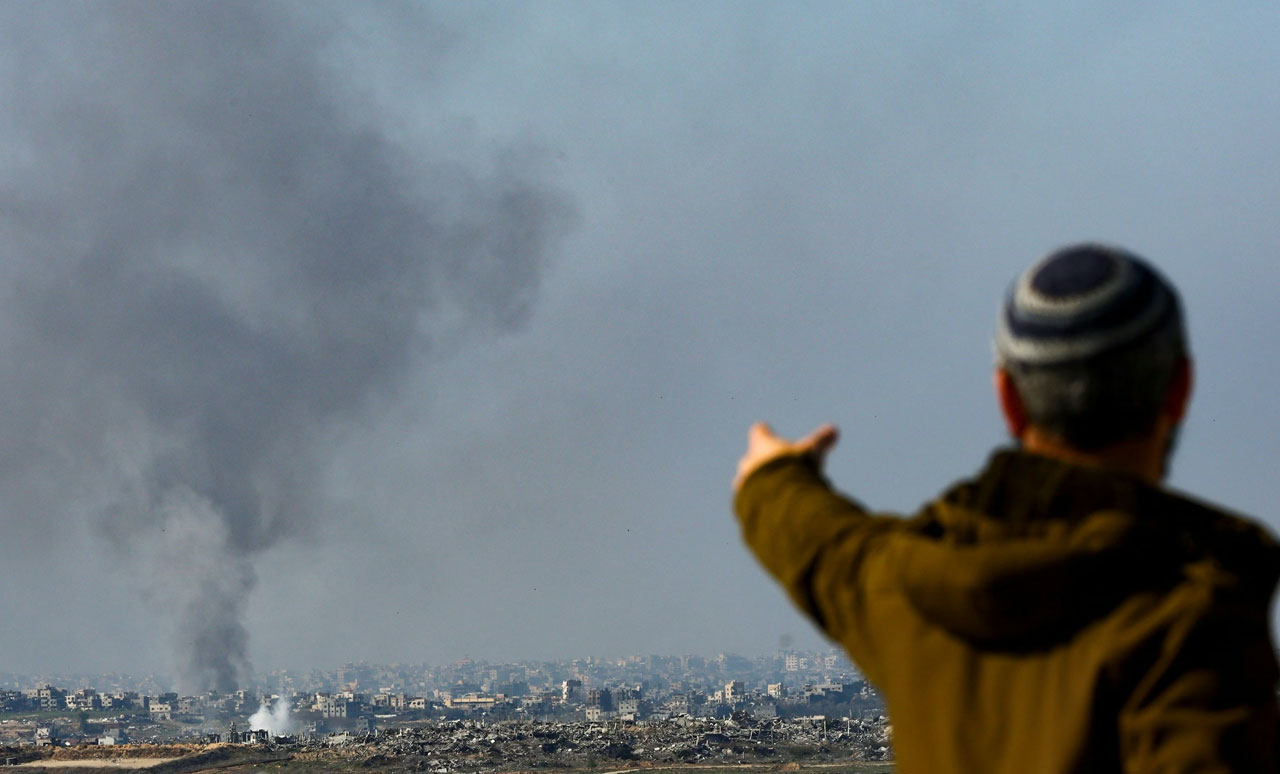


End Time Headlines: Israel carried out two waves of airstrikes against targets linked to Hezbollah across southern Lebanon, hitting seven sites in total, as tensions along the Israel–Lebanon border continued to escalate, according to a report by The Times of Israel that described the operation as a focused response carried out over a short period rather than a prolonged campaign.
The strikes were conducted in two distinct phases, suggesting a deliberate effort to hit multiple locations tied to the same operational network.
Israeli military statements described the targets as Hezbollah infrastructure, a term commonly used to refer to assets such as weapons storage facilities, command posts, observation positions, or launch-related sites. By splitting the attack into waves, Israel appeared to be signaling both tactical precision and readiness to sustain pressure if necessary.
Southern Lebanon has remained a flashpoint since the outbreak of the Gaza war, with near-daily exchanges of fire across the border. Hezbollah, an Iran-backed militant group that holds significant political and military power in Lebanon, has launched rockets, anti-tank missiles, and drones toward northern Israel, while Israel has responded with artillery fire, airstrikes, and targeted attacks.
Although neither side has indicated an interest in full-scale war, the steady tempo of strikes has kept the risk of wider escalation high.
Israeli officials have repeatedly said their goal is to prevent Hezbollah from establishing or maintaining offensive capabilities close to the border.
Airstrikes like these are often framed as preemptive or retaliatory actions aimed at degrading the group’s ability to launch attacks, rather than attempts to seize territory or dismantle Hezbollah entirely. By focusing on a limited number of sites, Israel appears to be balancing military objectives with an effort to avoid triggering a broader conflict.
The choice to strike in southern Lebanon is also significant. That region has long served as Hezbollah’s primary area of operations against Israel, and it is where the group embeds much of its military infrastructure within or near civilian areas.
This reality complicates military action, raising the risk of civilian harm and international criticism even when strikes are aimed at militant targets. For Israel, demonstrating that attacks are limited and targeted is part of managing that risk.
From Hezbollah’s perspective, the strikes reinforce its narrative that Israel is the aggressor, a message the group uses to justify its own cross-border attacks and maintain domestic support.
At the same time, Hezbollah has so far calibrated its responses, avoiding actions that would almost certainly provoke a large-scale Israeli offensive. This mutual restraint, though fragile, has kept the conflict at a relatively contained level.
Regionally, the strikes fit into a broader pattern of shadow conflict involving Israel, Iran, and Iran-aligned groups. Hezbollah is widely regarded as Iran’s most powerful proxy, and Israeli attacks on its assets are often interpreted as part of Israel’s effort to counter Iranian influence and deter further escalation. Each strike, however limited, adds to a growing chain of actions and reactions that increases the chance of miscalculation.
As of now, there has been no indication that the two waves of strikes will immediately expand into a wider campaign. Still, the fact that seven sites were hit in quick succession underscores how volatile the situation remains.
With thousands of Israeli and Lebanese civilians displaced from border communities and diplomatic efforts struggling to gain traction, even limited military actions carry outsized political and security consequences.
Prophetic Link:
“The coming of the Lord is nearer than when we first believed. The great controversy is nearing its end. Every report of calamity by sea or land is a testimony to the fact that the end of all things is at hand. Wars and rumors of wars declare it. Is there a Christian whose pulse does not beat with quickened action as he anticipates the great events opening before us?” Evangelism, 219.
Comments