

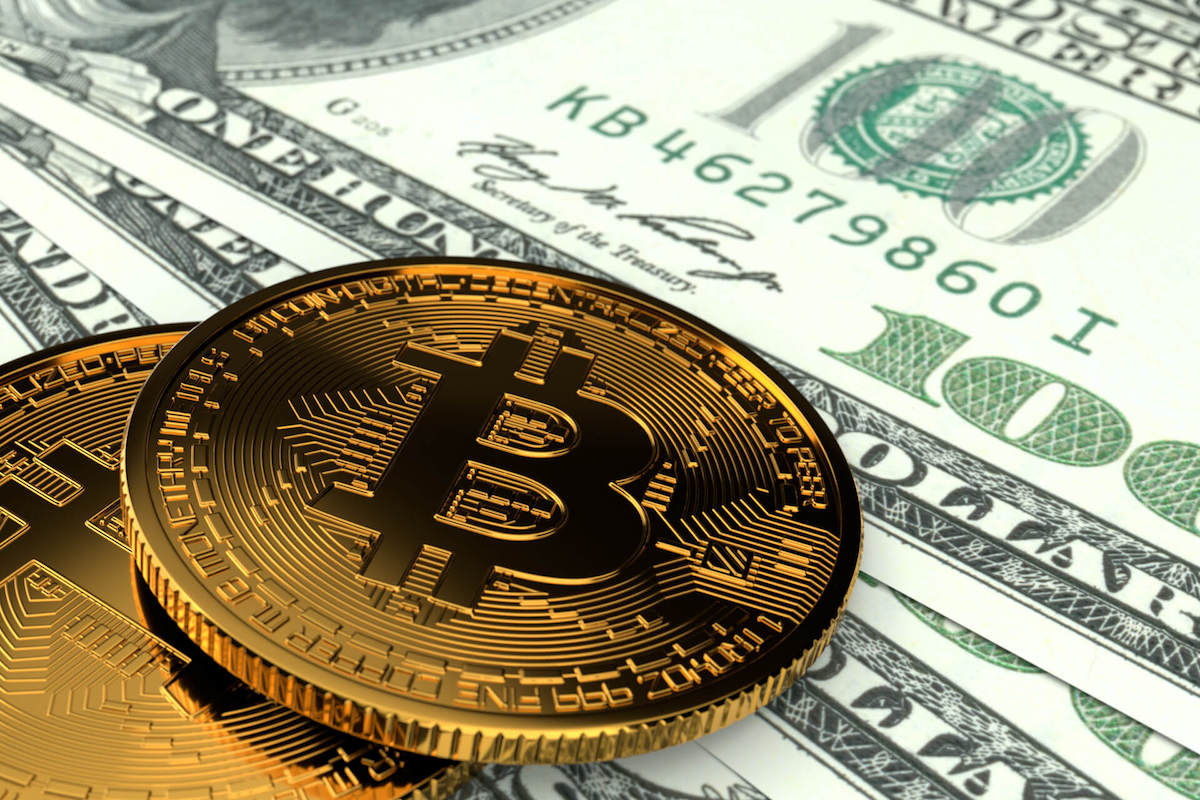


Politico, by Victoria Guida: The Federal Reserve is taking what may be the first significant step toward launching its own virtual currency, a move that could shake up banks, give millions of low-income Americans access to the financial system and fortify the dollar’s status as the world’s reserve currency.
The idea of creating a fully digital version of the U.S. dollar, which was unthinkable just a few years ago, has gained bipartisan interest from lawmakers as diverse as Sens. Elizabeth Warren (D-Mass.) and John Kennedy (R-La.) because of its potential benefits for consumers who don’t have bank accounts. But it’s also sparking strong pushback from those with the most to lose: banks.
“The United States should not implement a [central bank digital currency] simply because we can or because others are doing so,” the American Bankers Association said in a statement to lawmakers this week. The benefits “are theoretical, difficult to measure, and may be elusive,” while the negative consequences “could be severe,” the group wrote.
The explosive rise of private cryptocurrencies in recent years motivated the Fed to start considering a digital dollar to be used alongside the traditional paper currency. The biggest driver of concern was a Facebook-led effort, launched in 2019, to build a global payments network using crypto technology. Though that effort is now much narrower, it demonstrated how the private sector could, in theory, create a massive currency system outside government control.
Now, central banks around the world have begun exploring the idea of issuing their own digital currencies — a fiat version of a cryptocurrency that would operate more like physical cash — that would have some of the same technological benefits as other cryptocurrencies.
That could provide unwelcome competition for banks by giving depositors another safe place to put their money. A person or a business could keep their digital dollars in a virtual “wallet” and then transfer them directly to someone else without needing to use a bank account. Even if the wallet were operated by a bank, the firm wouldn’t be able to lend out the cash. But unlike other crypto assets like Bitcoin or Ether, it would be directly backed and controlled by the central bank, allowing the monetary authorities to use it, like any other form of the dollar, in its policies to guide interest rates.
The Federal Reserve Bank of Boston and the Massachusetts Institute of Technology’s Digital Currency Initiative are aiming next month to publish the first stage of their work to determine whether a Fed virtual currency would work on a practical level — an open-source license for the most basic piece of infrastructure around creating and moving digital dollars.
But it will likely be up to Congress to ultimately decide whether the central bank should formally pursue such a project, as Fed Chair Jerome Powell has acknowledged. Lawmakers on both sides of the aisle are intrigued, particularly as they eye China’s efforts to build its own central bank digital currency, as well as the global rise of cryptocurrencies, both of which could diminish the dollar’s influence.
Democrats have especially been skeptical about crypto assets because there are fewer consumer protections and the currencies can be used for illicit activity. There are also environmental concerns posed by the sheer amount of electricity used to unlock new units of digital currencies like Bitcoin.
Warren suggested the Fed project could resolve some of those concerns.
“Legitimate digital public money could help drive out bogus digital private money, while improving financial inclusion, efficiency, and the safety of our financial system — if that digital public money is well-designed and efficiently executed,” she said at a hearing on Wednesday, which she convened as chair of the Senate Banking Committee’s economic policy subcommittee.
Other senators highlighted the potential for central bank digital wallets to be used to deliver government aid more directly to people who don’t have bank accounts. A digital dollar could also be designed to have more high-tech benefits of some cryptocurrencies, like facilitating “smart contracts” where a transaction is completed once certain conditions are met.
Neha Narula, who’s leading the effort at MIT to work with the Boston Fed on a central bank digital currency, called the project “a once-in-a-century opportunity to redesign the dollar” in a way that supports innovation much like the internet did.
Still, there are a slew of unanswered policy questions around how a digital dollar would be designed, such as how people would get access to the money, or how much information the government would be able to see about individual transactions. The decision is also tied to a far more controversial policy supported by Democrats like Warren and Senate Banking Chair Sherrod Brown to give regular Americans accounts at the Fed.
“What problem is a central bank digital currency trying to solve? In other words, do we need one? It’s not clear to me yet that we do,” Sen. Pat Toomey (R-Pa.) said. “In my view, turning the Fed into a retail bank is a terrible idea.”
And, “the fact that China is creating a digital currency does not mean it’s inevitable that the yuan would displace the U.S. dollar as the world’s reserve currency,” he said.
For their part, banks fear a Fed-issued digital currency could make it easier for customers to pull out large amounts of deposits and convert them to digital dollars during a crisis — the virtual equivalent of a bank run — putting financial stress on their institutions and making less money available to provide credit for people, businesses and markets.
It could also potentially deprive them of customers; something the lenders say would interfere with lawmakers’ vision of increased financial inclusion.
“While it is true that deposit accounts are often the first step towards inclusion, the benefits of a long-term banking relationship go well beyond a deposit account,” the ABA said in its statement. “The same is not true of a [central bank digital currency] account with the Federal Reserve, which would not grow into a lending or investing relationship.”
The Bank Policy Institute, which represents large banks, has also argued that many of the benefits of a digital dollar are “mutually exclusive (because they are predicated on different program designs) or effectively non-existent (because the program design that produces them comes with costs that are for other reasons unbearable).”
“The decision on whether to adopt a central bank digital currency in the United States is appropriately a long way off,” BPI President and CEO Greg Baer said. “There are also complex and serious costs that will need to be considered.”
But many lawmakers think it’s worth the effort to look into it.
“The Federal Reserve should continue to explore a digital [currency]; nearly every other country is doing that,” Sen. Bill Hagerty (R-Tenn.) said at the hearing, citing the risk for the U.S. to lose its ability to deploy economic sanctions as effectively with decreased usage of the dollar.
Our Comment:
If digital currencies are easy to be inclusive, they are also easy to be exclusive, especially for those who run afoul of laws governing worship. Economic sanctions are predicted in the Bible as a weapon to be used against those that refuse to take the mark of the beast.
Prophetic Link:
“And he causeth all, both small and great, rich and poor, free and bond, to receive a mark in their right hand, or in their foreheads. And that no man might buy or sell, save he that had the mark, or the name of the beast, or the number of his name.” Revelation 13:16, 17.
Comments