
• logo


logo

Timely and Inspiring Prophetic Analysis so you can Prepare.


  • Home
  • Monthly Messages
    • Pastor Mayer
    • Pastor Nelson
    • 2025
    • 2024
    • 2023
    • 2022
    • 2021
    • 2020
    • 2019
    • 2018
    • 2017
    • 2016
    • 2015
    • 2014
    • 2013
    • 2012
    • 2011
    • 2010
    • 2009
    • 2008
    • 2007
    • 2006
    • 2005
    • 2004
    • 2003
    • 2002
    • 2001
    • 2000
    • 1999
    • 1998
  • Briefings
    • Prophetic Intelligence
    • Nature Knows Best
    • Prophetically Speaking
    • Articles of interest
  • Events
  • Videos
    • KTF News
    • KTF Live
    • Interviews
    • Sermons
    • Promo Video
  • Store
  • Make a Gift
  • Slider Image 1
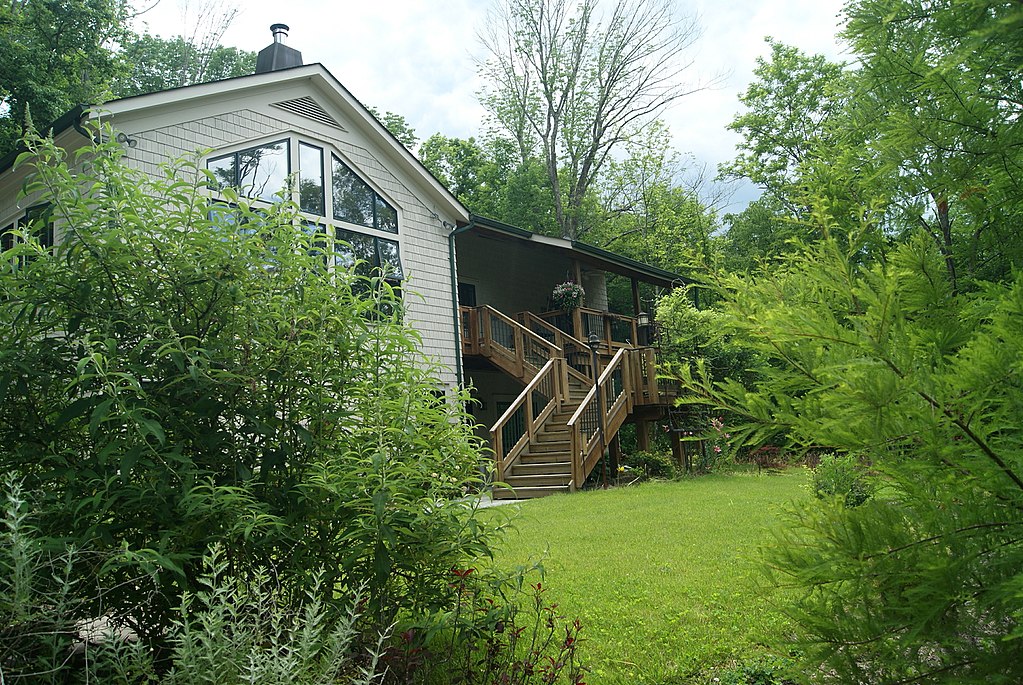
  • Image: Jeffery Roberts from Wikimedia Commons
loading...
  • Post
  • Similar Posts
  • Post Icon
  • author
  • Pastor Hal Mayer

    Speaker / Director

Scientists Discover a Major Lasting Benefit of Growing Up Outside the City

Tuesday August 25th, 2020
Print This Post Print This Post

Pocket, by Emma Betuel: The escape of a trip into mountains or a day lying by the beach may feel like an extravagance to city dwellers confined by a traditional work schedule. But exposure to green and blue spaces is far more than just a luxury. For kids, growing up without regular exposure to nature seems to have ripple effects that persist into adulthood, according to research published in International Journal of Environmental Health and Public Health.

Using data from 3,585 people collected across four cities in Europe, scientists from the Barcelona Institute for Global Health (also called IS Global) report a strong relationship between growing up away from the natural world and mental health in adulthood. Overall, they found a strong correlation between low exposure to nature during childhood and higher levels of of nervousness and feelings of depression in adulthood. Co-author Mark Nieuwenhuijsen, Ph.D., director of IS Global’s urban planning, environment and health initiative, tells Inverse that the relationship between nature and mental health remained strong, even when he adjusted for confounding factors.

“What we found is that the childhood experience of green space can actually predict mental health in later life,” Nieuwenhuijsen says. “The people that reported more exposure to nature actually have better mental health than those that don’t even after we adjust for exposure at the time of the interview, when they are adults.”

Across people in Barcelona, Spain; Doetinchem, the Netherlands; Kaunas, Lithuania; and Stoke-on-Trent in the UK, the pattern held up, suggesting a deep relationship between nature and mental health that we’re only beginning to understand.

Why is Exposure to Nature So Good for Kids (and Adults)?

Though this study doesn’t show a causative relationship between nature exposure and adult mental health exist, but first author Wilma Zijlema, Ph.D., explains two ways of interpreting the results in the context of other research in the field.

For one thing, many studies have noted nature’s ability to reduce rumination, a risk factor for mental illness. Spending time in nature, Zijlema says, has been linked with increased self-esteem, quality of life, and physical activity as well as lower body mass index. In this sense, nature itself is beneficial.

These findings fold into the “biophilia hypothesis” — the idea that humans intrinsically seek out connections with nature, including exposure to green spaces. An offshoot of this idea is that nature promotes certain developmental changes in the brain, particularly in children, that may not happen when we’re removed from it.

Nieuwenhuijsen presented some evidence for this in a 2018 study showing that exposure to green space correlated with structural changes in the brain and greater working memory in 258 schoolchildren in Spain.

“This is just kind of a hypothesis,” Nieuwenhuijsen explains. “I think the reason for it is, in general, our brains are still wired for when we were still living in the savannahs and jungles with a lot of nature around us. It’s only the last few hundred years that we have moved into cities. Our brains are not really adjusted to that. It creates a kind of stress, and in particular, there’s a lot of brain development happening at young ages.”

The second way to interpret the results, says Nieuwenhuijsen, is to consider not the benefits of nature exposure but the disadvantages of being away from it. Polluted cities, in particular, seem to extract additional tolls on health and may actually impact cognitive development in children. Air pollution has been linked with delays in cognitive development in kids as well as psychosis in adults.

These negative aspects of being removed from nature highlight the “indirect” way that growing up in a city could have lasting effects. In other words, the way we’ve designed our cities is inherently harmful.

“There are also indirect benefits for cognitive development of children, including the mitigation of traffic-related air pollution, reduction of noise, and increased levels of physical activity,” Zijlema says. “We think that through these pathways nature exposure during childhood could lead to benefits that prolong into adulthood.”

How Much Nature Do We Really Need?

Most Americans live either in cities or suburbs. According to a 2018 report from the Pew Research Center, 55 percent of Americans lived in suburban counties and 31 percent lived in urban ones in 2016.

Much as they might like to, most of these people can’t spend the majority of their days working from a log cabin in the mountains. But in order to protect themselves against potential mental health issues, says Zijlema, the more regular exposure to nature they can get, the better.

“We cannot really say how much exposure exactly there should be,” she says. “Children that have poor residential access to nature could certainly benefit from field trips in nature, but it would probably be better if there’s regular exposure at home and school.”

Regular exposure to nature could be a byproduct of living outside of the urban environment — say, in a suburb with easy access to a national park or a beach. But in the long term, a more comprehensive way to combat this issue would require re-evaluating the way we design the places where we spend most of our days. There’s something to be said for walking through a park on the way to school, or dipping our toes in a pond at the end of the day.

“We hope that city mayors, urban planners, and architects realize how important urban nature is,” says Zijlema, “and that they will ensure that nature is accessible for all children so that they can grow up in a healthy environment that can have long-term benefits for their health.”

Abstract: Exposure to natural outdoor environments (NOE) is associated with health benefits; however, evidence on the impact of NOE exposure during childhood on mental health (MH) and vitality in adulthood is scarce. This study was based on questionnaire data collected from 3585 participants, aged 18–75, in the PHENOTYPE project (2013) in four European cities. Mixed models were used to investigate associations between childhood NOE exposure and (i) MH; (ii) vitality (perceived level of energy and fatigue); and (iii) potential mediation by perceived amount, use, satisfaction, importance of NOE, and residential surrounding greenness, using pooled and city-level data. Adults with low levels of childhood NOE exposure had, when compared to adults with high levels of childhood NOE exposure, significantly worse mental health (coef. −4.13; 95% CI −5.52, −2.74). Childhood NOE exposure was not associated with vitality. Low levels of childhood NOE exposure were associated with lower importance of NOE (OR 0.81; 95% CI 0.66, 0.98) in adulthood. The association with perceived amount of NOE differed between cities. We found no evidence for mediation. Childhood NOE exposure might be associated with mental well-being in adulthood. Further studies are needed to confirm these findings and to identify mechanisms underlying long-term benefits of childhood NOE exposure.

Prophetic Link:
“Nearly all dwellers in the country, however poor, could have about their homes a bit of grassy lawn, a few shade trees, flowering shrubbery, or fragrant blossoms. And far more than any artificial adorning will they minister to the happiness of the household. They will bring into the home life a softening, refining influence, strengthening the love of nature and drawing the members of the household nearer to one another and nearer to God.” The Ministry of Healing, 370.


Source References

  • Scientists Discover a Major Lasting Benefit of Growing Up Outside the City

Prophetic Intelligence Briefings are provided to show a link between current events and Bible prophecy only. The reposted articles, which are not intended as a commentary in support of or in opposition to the views of the authors, do not necessarily reflect the views of Pastor Mayer or of Keep the Faith other than to point out the prophetic link.

Comments


Post a Comment!

Cancel reply

This site uses Akismet to reduce spam. Learn how your comment data is processed.


  • Request your free subscriptions now

    • English
    • Deutsch
    • Español
    • Português
  • Latest Message

    Request CD | View Transcript
  • Make a Gift

    Or click here to send a check
  • Prophetically Speaking…

    “The most odious of all oppressions are those which mask as justice.” more…

  • Recent Posts

    • Dozens dead, hundreds missing; fire grips towering Hong Kong buildings
    • Prophetically Speaking…
    • After hurricane, mosquito-transmitted diseases pile on top of Cuba’s troubles
    • Prophetically Speaking…
    • Liberal Protestant churches proclaim ‘holiness’ of transgenderism, rebuke Catholic bishops
  • Tags

    Catholic Church church and state Donald Trump government LGBTQ natural disaster politics Pope Francis Prophetically Speaking Quote of the Day religion religious liberty United States Vatican
  • Recent Comments

    • Stephen Chang on Praying for the Dead: Sweetest of the Spiritual Works of Mercy
    • John on Charlie Kirk and the Sabbath rest
    • William Stroud on UMC church paints steps in rainbow colors in opposition to governor’s directive
    • William Stroud on Police in India arrest Pastor after Hindu extremist attack
    • William Stroud on From Israel to the US, Vice President JD Vance isn’t shy about his religion
  • Follow


logo
  • Home
  • Subscribe
  • Store
  • About KTF
  • Meet the Team
  • Terms of Use
  • RSS Feed
  • Contact
top

© 2025 Keep the Faith. All Rights Reserved.  Webmaster »


Share
Send Email
  • Send
close